7 Causes of Ingrown Toenails
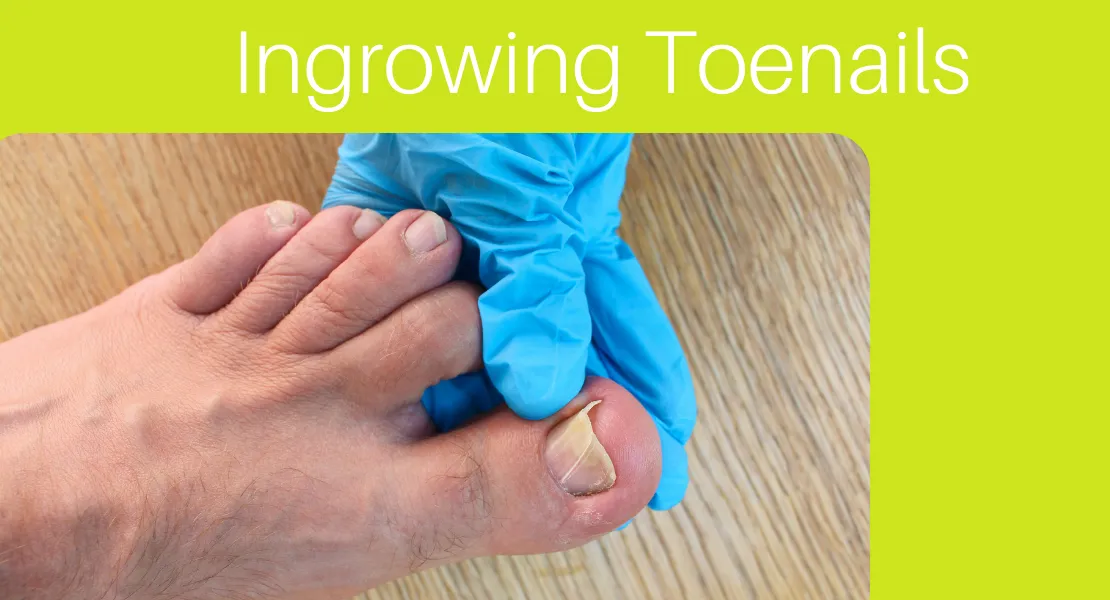
Most ingrown toenails have a simple cause, from how you cut your nails to the shoes you wear, and many can be prevented. Here are the seven most common causes, what you can do about each, and when to see a podiatrist.
Last updated: 15 October 2026 · Reviewed by Hiren Patel, HCPC-registered Clinical Director & Lead Podiatrist
So, What Are The Main Causes Of Ingrowing Nails?
- Badly cut toenails — cutting the nails too short or curving down at the corners encourages the skin to fold over the nail edge
- Stubbing your toe — a direct knock can change the way the nail grows afterwards
- Repeated micro-injuries — kicking a ball all day or repeated pressure can gradually distort the nail
- Shoes that are too tight — cramming wide feet into narrow shoes squeezes the nail into the surrounding skin
- Picking or tearing at your toes — this leaves jagged nail edges that dig in as they grow
- Sweaty feet — soft skin is easier for the nail edge to press into, which is why teenagers are so often affected
- Genetics — naturally curved or fan-shaped nails run in families
A few of these causes you can't do anything about; you might be genetically pre-dispositioned to have ingrowing toenails or have inherited sweaty feet; accidents also happen, which may randomly cause your toenail to grow incorrectly. The others you do have control over. It is vital that you trim your (and your children's) toenails correctly; straight across, do not curve down at the sides. You may love thin, pointy shoes, but if you have wide feet, you will be cramming your feet into them, putting pressure on them for hours.
If you've ever had an ingrowing toenail, you'll know the agony it causes; the nail poking into your flesh can cause pain for every step you take. It can be difficult to sleep as even the weight of the duvet can be too much on your toe, let alone the extreme shooting pains that happen if someone accidentally steps on your toe! Ouch doesn't cover it!
We hear of people who have lived with ingrowing toenails for years; they go around this cycle.
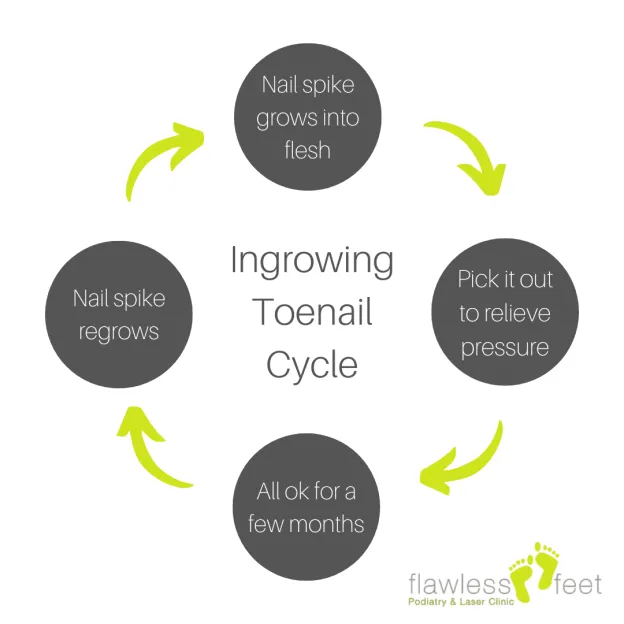
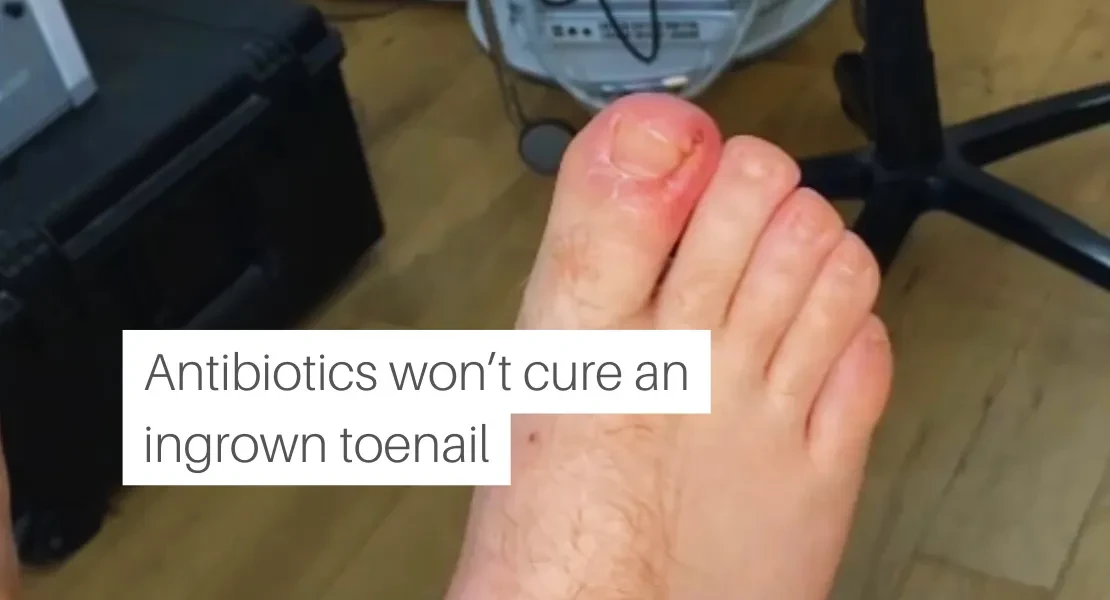
If they are lucky, they can keep it at bay; it's not what we recommend; ideally, we'd like to assess and treat them. Picking out the nail and relieving the pressure will never sort the problem; it will always return. If they are unlucky, at some point when they are picking at the nail, they will introduce an infection into the skin, which will lead to the toe becoming:
- Swollen
- Red
- Bleeding
- Infected and oozing pus
Once this happens, the pain and embarrassment triple; they will probably need medication to treat the infection, and the open wound can take a long time to heal. Not sure if that's what you're dealing with? Our guide to the symptoms of an ingrowing toenail covers what to look for and when to seek help.
What The Latest Evidence Says (2026)
Ingrowing toenails are one of the most researched foot conditions, and the picture from recent studies — including a 2025 network meta-analysis comparing every major treatment approach — is reassuringly clear:
- Antibiotics alone don't fix the problem. They can clear the infection, but unless the nail edge causing it is treated, the cycle simply restarts once the course finishes.
- Mild cases can respond to conservative care. Gutter splints, cotton nail casts and nail bracing can help early, non-infected nails — especially in teenagers or during pregnancy — but they demand consistent professional follow-up and don't work once the nail is deeply embedded.
- Earlier is easier. Treating the nail before infection sets in means shorter appointments, faster healing and far less pain.
Source: Eekhof JAH, Van Wijk B, Neven AA, van der Wouden JC. Interventions for ingrowing toenails. Cochrane Database of Systematic Reviews 2012, Issue 4. Art. No.: CD001541. Read the review.
And if prevention and early care aren't enough, nail surgery is a proven last resort: adding phenol during a partial nail avulsion reduces the chance of the nail growing back wrong by around 85–90% compared with removing the nail alone (Eekhof et al., Cochrane review), with success rates of around 88–95% in clinical studies. Our podiatrists perform it in-clinic under local anaesthetic, from £600 including follow-up appointments — read the full treatment guide.
Prevention Is Better Than Cure
For those fortunate enough to have not experienced an ingrowing toenail, follow these tips:
- Cut your toenails properly — straight across, never curved down at the sides, and never too short (see the diagram below)
- Choose shoes with room for your toes — a wide, deep toe box beats narrow, pointy styles every time
- Get the size right — there should be about a thumb's width between your longest toe and the end of the shoe
- Check your feet regularly for early redness or tenderness at the nail edges
- Keep up a good foot hygiene routine — clean, dry feet and fresh socks
How to cut toenails correctly
The single biggest cause of ingrowing toenails is cutting technique. Use proper nail clippers or nail nippers, cut straight across so the nail edge is level with the tip of the toe, and leave a few millimetres of white nail showing. If a corner feels sharp, file it gently flat rather than digging down into the corners — and resist the urge to tear or pick at the nail, which leaves jagged edges that dig in as they grow.
Shoes that cause (or prevent) ingrown toenails
Tight, narrow or pointy shoes press the sides of the nail into the skin, and the pressure adds up over hours of wear. When buying shoes, make sure the toe box is wide and deep enough for your toes to wiggle, allow a thumb's width between your longest toe and the front of the shoe, and try shoes on in the afternoon when feet are naturally at their largest. If you have wide feet, it's worth stepping away from thin, pointy styles altogether — cramming wide feet into narrow shoes squeezes the nail edge into the surrounding skin for hours at a time.
Teenagers and sport
Teenagers are prime candidates for ingrowing toenails: growth spurts mean nails and shoes can fall out of sync quickly, and sweaty feet from school shoes and sports soften the skin so the nail edge presses in more easily. Boots for football, rugby and hockey deserve special attention — narrow, snug boots worn for hours each week are one of the most common causes we see. Encourage teenagers to keep nails trimmed straight across, change socks straight after sport, dry feet thoroughly (especially between the toes), and check the nail edges regularly so any early redness is caught before it becomes painful.
If you spot the early signs despite your best efforts, an early assessment makes treatment far simpler — call us on 020 3713 8361, or read our ingrown toenail treatment guide to see what's involved.
Nail Surgery — A Permanent Fix
People often find the word “surgery” a bit daunting — please don’t. This is something we are expert at and perform many times a week. We have a 95% success rate, and even for that last 5% we just need an extra appointment to solve it. Nail surgery is a permanent solution — knowing you will be free from pain with every step you take is worth the investment.
How We Do It
- We anaesthetise your toe — a quick injection means you won’t feel anything during the procedure.
- We remove the outside edge of your nail — the bit that causes the pain.
- We use a chemical to kill a small section of the cells that grow nails, stopping that section from ever re-growing.
- We dress your toe to keep it clean, ready for you to go home.
- Generally, treatment for two toes takes about an hour.
What To Expect Afterwards
- You are in charge of your toe for a couple of weeks — we tell you exactly how to change the dressing and keep it clean.
- Shoe choice is key for a couple of weeks after surgery; you will need open, sandal-style shoes to allow for the dressing.
- Plan for a few weeks of no sports and rest your foot as much as you can.
- Be ready for the relief of never having ingrowing toenail problems again!
- Plan a shoe shopping spree — you will now be proud to have your toes on display.
We have some photos and video clips on our social media accounts. Lots of people prefer not to look, as the toes do look sore and covered in iodine — and some patients like to watch and ask lots of questions, which is also fine. Either way, we are here to answer any questions you have about toenail surgery.
Struggling With An Ingrowing Toenail?
Our podiatrists can assess the toe, treat any infection and talk you through every option — from simple nail care advice to permanent nail surgery. An early assessment makes everything easier.
Ingrowing Toenails: Frequently Asked Questions
Visit Flawless Feet
We look forward to welcoming you at one of our three London clinics:
The team at Flawless Feet Podiatry & Laser Clinic
Related Blogs