
Hallux Rigidus: Causes, Symptoms, and Treatment Options in London
Expert diagnosis and treatment for a stiff, painful big toe at Flawless Feet Podiatry & Laser Clinic — trusted podiatrists in Sydenham, Covent Garden & Croydon helping you stay mobile and pain-free.

Hallux Rigidus Treatment at a Glance
- Hallux rigidus is arthritis of the big toe joint — the cartilage wears down, the joint stiffens and bone spurs form on top of it. It is progressive without treatment.
- Common triggers include inherited foot shape, overpronation or flat feet, previous toe injuries, repetitive strain and footwear choices.
- Most patients are treated successfully without surgery — custom orthotics, footwear changes, laser or shockwave therapy and tailored exercises.
- Early assessment makes the biggest difference: the sooner the joint is supported, the more motion and comfort you keep.
Source: NHS — Hallux rigidus
Expert Diagnosis & Care by Podiatrists and Chiropodists in London
If your big toe feels stiff, painful or grinds when you walk — and bending it feels harder than it used to — you may be developing hallux rigidus.
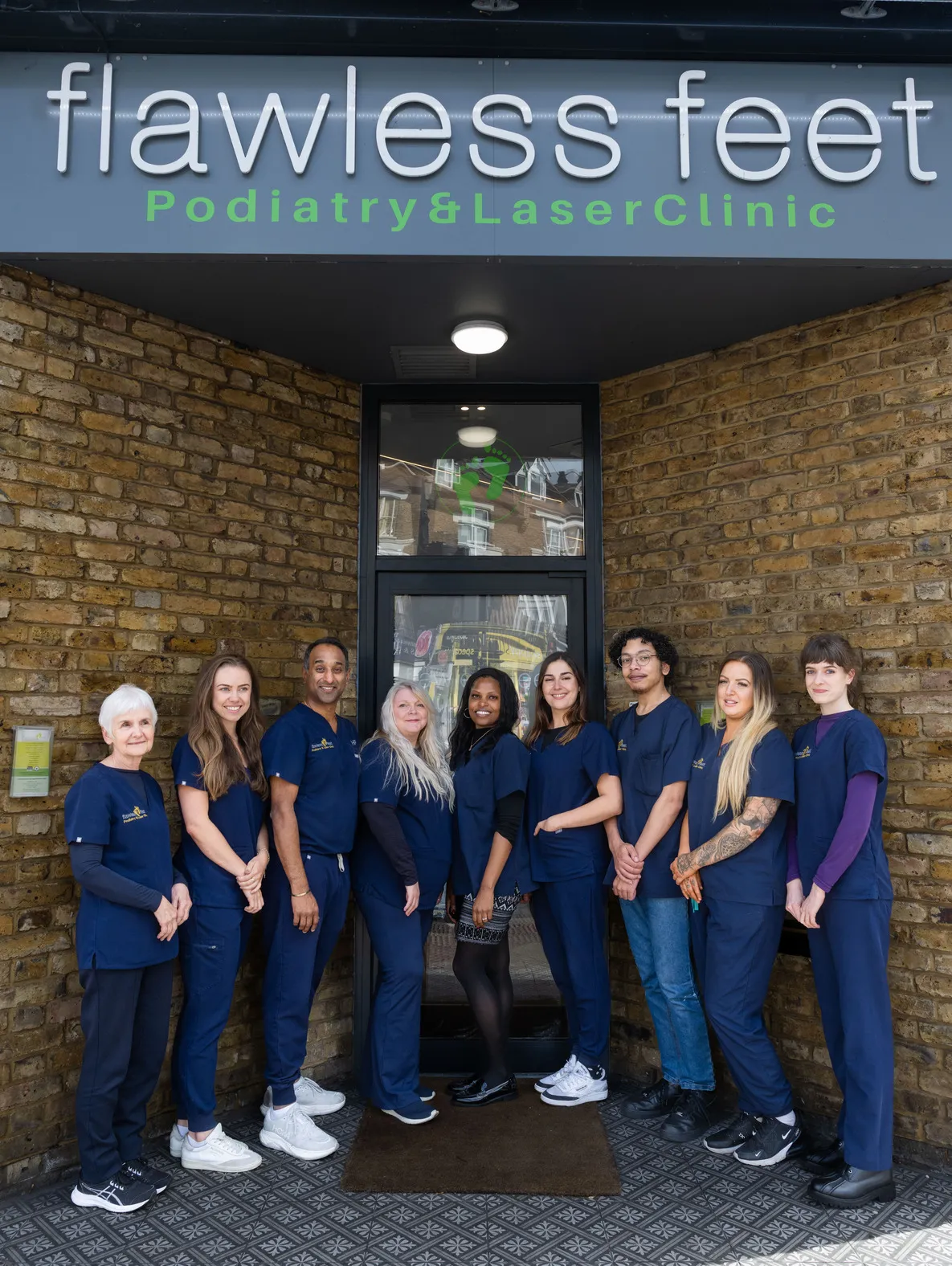
At Flawless Feet Podiatry & Laser Clinic in London, our experienced podiatrists and chiropodists specialise in the early detection, management and non-surgical treatment of hallux rigidus, helping you stay mobile, pain-free and confident.


What Is Hallux Rigidus?
Hallux rigidus is a form of arthritis at the base of the big toe (the metatarsophalangeal joint). Over time the protective cartilage in the joint wears down, the joint becomes inflamed and stiffens, and extra bone (bone spurs or osteophytes) builds up around the top of the joint. The result is a big toe that becomes increasingly painful and rigid — hence the name, which literally means “rigid big toe”.
Because every step pushes off through the big toe, hallux rigidus can affect the way you walk, your balance, and even the joints above it — the ankle, knee, hip and lower back. It is the most common form of arthritis in the foot, and it tends to worsen gradually without treatment, making early intervention crucial.
Both bunions and hallux rigidus affect the same joint, but they are different conditions — more on that below.
What Causes Hallux Rigidus?
Several factors can lead to the development of hallux rigidus, including:
- Genetic predisposition – an inherited foot shape or joint structure can make the big toe joint more prone to wear.
- Poor foot mechanics – overpronation or flat feet can place excess load on the big toe joint with every step.
- Injury or trauma – a stubbed toe, sprain or fracture can damage the joint surface and trigger early arthritis.
- Repetitive strain – activities that repeatedly stress the big toe, such as running, squatting or climbing stairs at work.
- Footwear – frequent wear of high heels or narrow, stiff-toed shoes that force the big toe upwards.
- Inflammatory conditions – gout, rheumatoid arthritis or previous infection in the joint can accelerate cartilage damage.
Hallux rigidus does not develop overnight — it gradually worsens as the joint wears, which is why an early assessment makes such a difference to long-term outcomes.

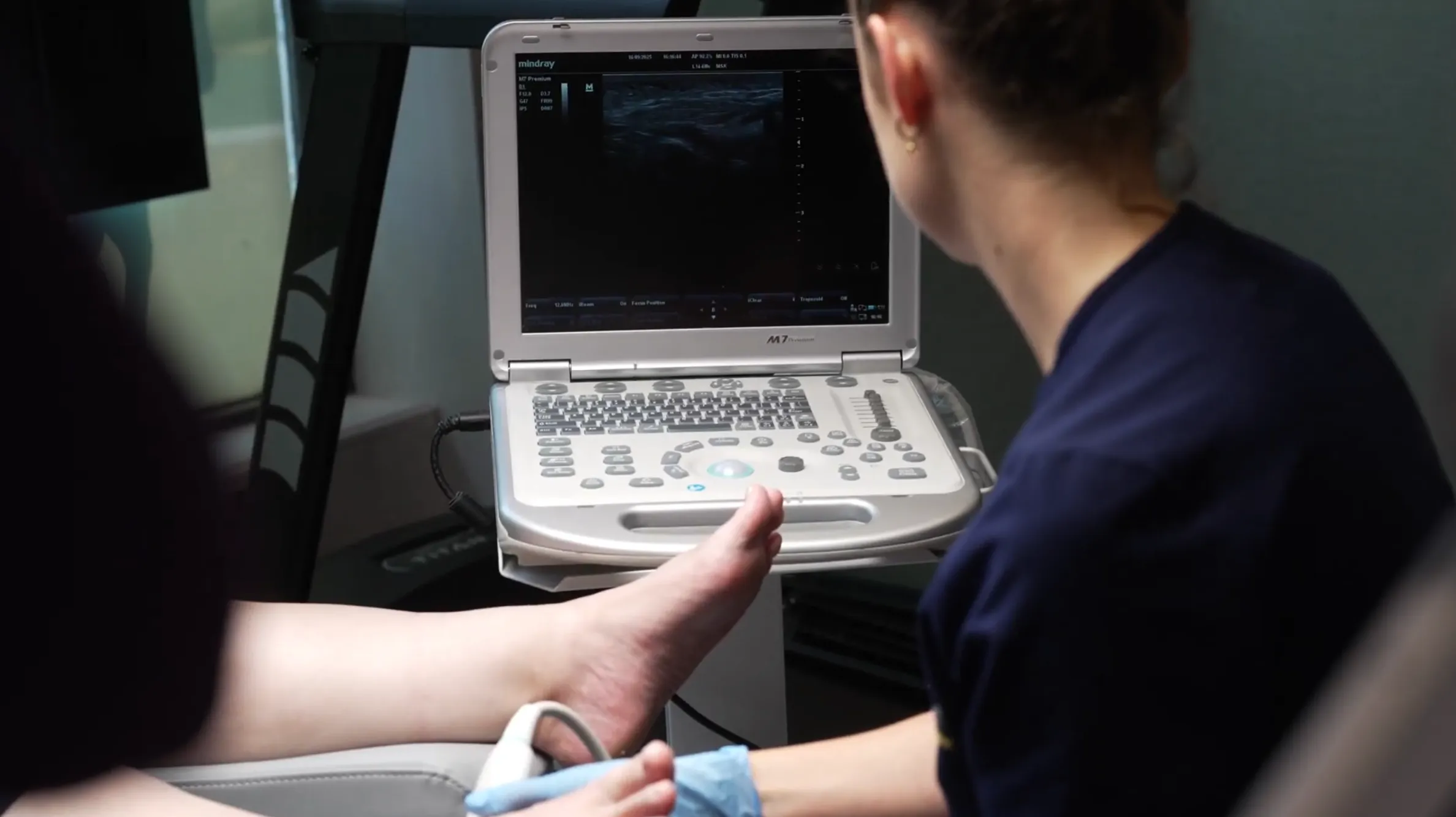
Common Hallux Rigidus Symptoms
You may be developing hallux rigidus if you experience:
- Pain, stiffness or aching at the base of the big toe, especially when pushing off
- Reduced ability to bend the big toe upwards
- A bony bump on the top of the big toe joint (a bone spur)
- Swelling, redness or warmth around the joint
- A grinding or clicking sensation when moving the toe
- Difficulty with squats, stairs, running or wearing heels
- Pain in the ball of the foot, ankle, knee or hip as your walking pattern changes to avoid the sore toe
In cold, damp weather the joint often feels stiffer and more painful — a common hallmark of arthritis in the toe.
When to See a Podiatrist Urgently
Book an appointment promptly if you notice sudden severe pain with redness and warmth around the big toe (which can indicate gout rather than arthritis), signs of infection, or you are unable to put weight on the foot — and always seek professional advice early if you have diabetes, poor circulation or a weakened immune system. Don't wait for the joint to fuse; our podiatrists can assess it and get you a plan.
Hallux Rigidus vs Bunions
Hallux rigidus and bunions both affect the big toe joint and are often confused, but they are different conditions:
- Bunions (hallux valgus) – the big toe drifts sideways towards the second toe, creating a bump on the side of the foot.
- Hallux rigidus – the big toe stays in line but the joint becomes stiff and arthritic, with a bump typically forming on the top of the joint.
They can also occur together, and both respond best to early, conservative podiatry care. A proper assessment will identify exactly which condition is causing your symptoms — and the right plan to treat it.
Professional Hallux Rigidus Treatment in London
At Flawless Feet Podiatry & Laser Clinic, our approach focuses on early diagnosis and conservative (non-surgical) care to relieve pain, protect the joint and keep you moving.
You'll find us in Sydenham, Covent Garden and Croydon — wherever you are in London, expert big toe joint care is close by.
1. Biomechanical Assessment & Gait Analysis
We start with a comprehensive foot and lower limb assessment — including gait analysis where appropriate — to identify the mechanics loading your big toe joint and any contributing factors.
2. Custom Orthotics & Stiffening Insoles
We design custom foot orthotics that reduce bending forces through the big toe joint, redistribute pressure and improve overall foot function — often the single most effective non-surgical treatment for hallux rigidus.
3. Footwear Recommendations
The right shoes make a real difference. We help you choose shoes with a stiff, rocker-bottomed sole and a low, wide toe box that reduce big toe bending and take pressure off the joint.
4. Pain Relief Treatments
For flares of inflammation we offer non-invasive therapies such as high-intensity laser, shockwave therapy and manual joint mobilisation to reduce pain, swelling and stiffness.
5. Strengthening and Mobility Exercises
We provide exercises to maintain joint mobility, strengthen the foot's stabilising muscles and improve your walking pattern — protecting the joints above the toe as well.
What Happens if You Ignore Hallux Rigidus?
Left untreated, hallux rigidus typically worsens over time. Common long-term consequences include:
- Increasing pain during everyday activities
- Progressive, permanent stiffening of the big toe joint
- Larger bone spurs that make shoes uncomfortable
- Altered walking pattern causing pain in the ball of the foot, ankle, knee, hip or back
- Greater risk of needing joint surgery in the future
Our experience shows that early intervention can significantly reduce symptoms and slow the arthritis down. Don't wait until your only option is surgery — visit our clinic for a proactive, personalised plan.
Do I Need Hallux Rigidus Surgery?
Surgery is usually considered a last resort, when conservative treatments fail to relieve pain or when the joint is severely arthritic and limits daily life. Most patients benefit from non-surgical care, especially when treatment is started early.
If surgery does become necessary, options range from a cheilectomy (removing bone spurs) in earlier stages to joint fusion in advanced arthritis. We can refer you to trusted orthopaedic specialists and provide pre- and post-op podiatry support — including orthotics and rehabilitation — to ensure optimal recovery.
Wondering about cost? Browse our podiatry fee guide — clear, honest pricing before you book.
Why Choose Flawless Feet Podiatry & Laser Clinic?
Specialist podiatrists and chiropodists in London Expert gait analysis and custom orthotics for big toe joint pain Advanced non-surgical therapies including high-intensity laser and shockwave Advice to slow arthritis progression and protect the joints above the toe Convenient clinic locations in Sydenham, Covent Garden & Croydon with flexible appointments Easy online booking and clear, honest pricing
At Flawless Feet, we combine clinical expertise with compassionate care, ensuring that every step you take is comfortable and pain-free.
Find Your Nearest Hallux Rigidus Clinic in London
Expert podiatry care is never far away — visit us in Sydenham, Covent Garden or Croydon, open six days a week.
Ready to Walk Without Big Toe Pain?
Book a hallux rigidus assessment with our trusted podiatrists in Sydenham, Covent Garden & Croydon and get a clear, personalised plan to keep you moving.
Book AppointmentFrequently Asked Questions
Book Your Podiatrist in London
Book your assessment at Flawless Feet Podiatry & Laser Clinic in Sydenham, Covent Garden or Croydon and experience expert care designed to relieve discomfort, restore movement, and get you back on your feet, comfortably.
Customer Testimonials
Rated five stars by happy patients across Sydenham, Covent Garden & Croydon.