Story Of A Fungal Nail Removal

Trigger warning: the video and photos below are quite graphic.
We have recently treated this patient for a fungal toenail infection and wanted to share her story with you. We are pleased she came in for treatment when she did — a fungal nail infection can get much worse than this.
This patient cannot remember exactly how long she has had the fungal nail infection, but her nail has steadily become thicker and more discoloured over the last few years. She has felt an increasing level of pain in the toe for the last six months.
At her initial consultation appointment, we assessed the level of damage and discussed the options. We decided the best course of action would be to remove the nail, as the infection had travelled too far into the nail matrix. The nail matrix — where your nails form (the white crescent at the base of your nail is part of it) — can be harmed by injury and infection, but it does heal and will regrow healthy nails.
 We booked the nail surgery at a time when the patient could relax for the rest of the day. We followed our standard procedure for nail
surgery: anaesthetic, sterilisation of the area, tourniquet, removal of the nail, cleaning of the area, dressing the toe and aftercare
instructions.
The surgery went smoothly. Once the nail was removed, we found an exostosis — an excess of bone growth under the nail, probably caused by a previous injury.
All the patient needs to do is keep her toe clean and dry whilst the dressing is on. She will come in for a check-up in a couple of weeks so we can assess how the healing is going. The toenail will grow back clear and at a normal thickness over the next few months — we are looking forward to seeing the results.
We treat all levels of fungal nail infection and love helping people have healthy feet. Our advice is to check your feet and nails regularly, as it is quicker, easier and cheaper to sort most conditions in their early stages.
Watch the whole surgical procedure in fast forward here: watch the full procedure
Treatment Options At A Glance
- Mild — over-the-counter treatments. Only a few pounds to buy, but you need to be committed and apply daily for a number of months for a small chance of cure.
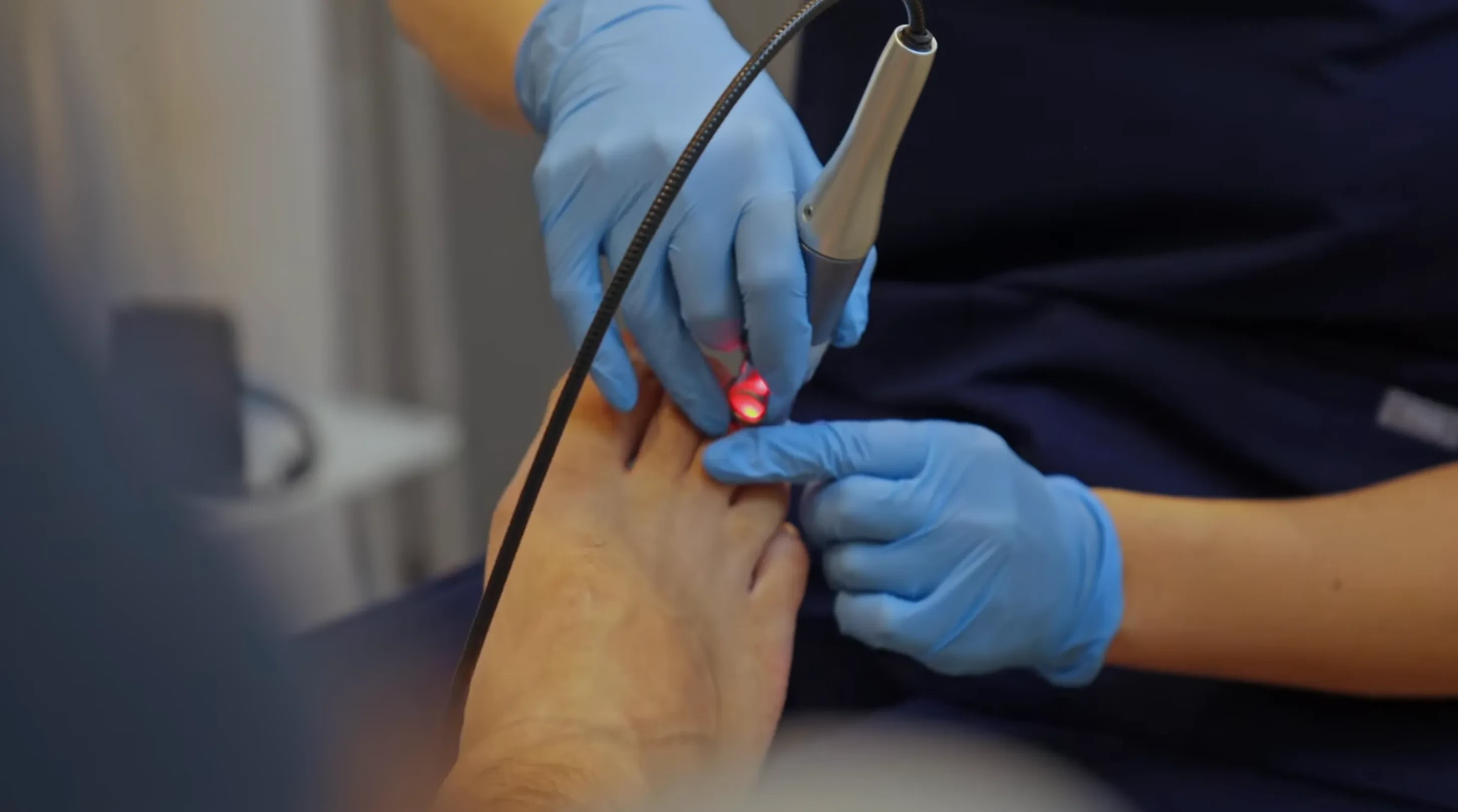
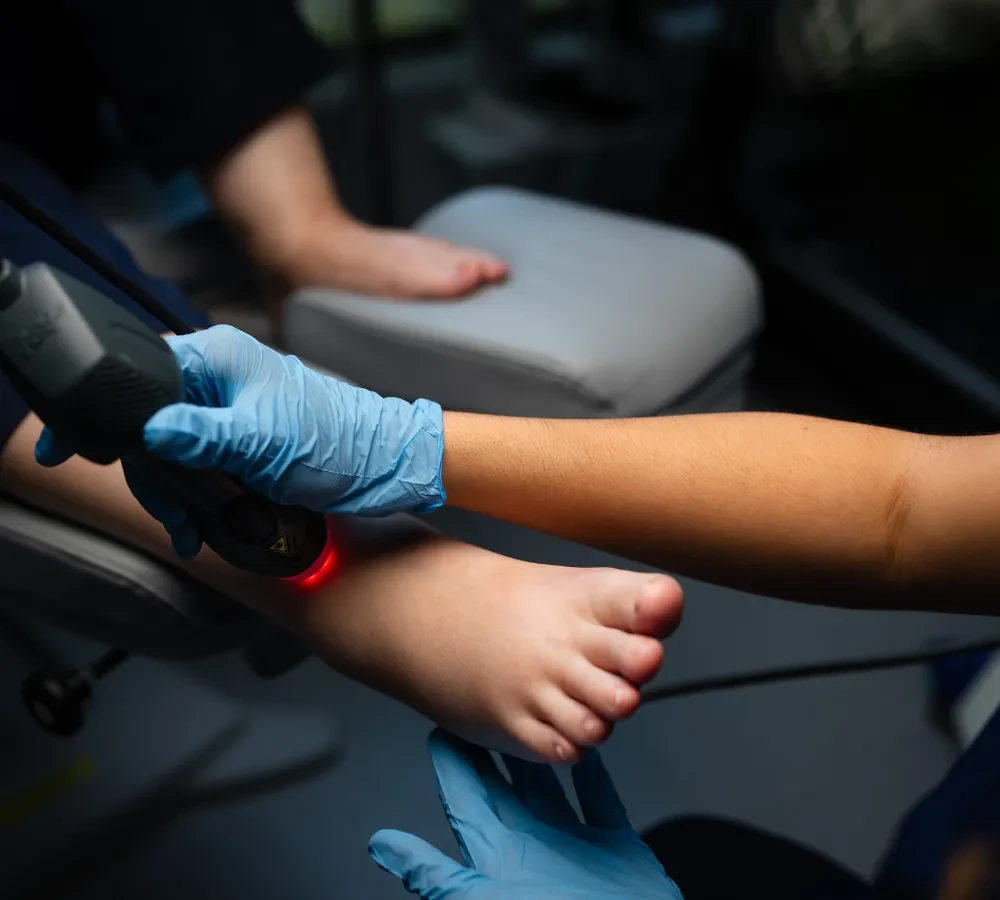
- Mid — laser. Four pain-free treatments with no aftercare and a 90% cure rate.
- Severe — nail removal. Local anaesthetic to remove the nail, then a few weeks of taking care of your toe.
- Extreme — surgery to remove infected bone underneath a nail infection. Local anaesthetic to remove the nail, then a few weeks of taking care of your toe.
Never be embarrassed if you have a fungal infection — fungal spores are all over the place, and it only takes a small injury or damage to your nail to allow an infection to develop. Get in contact with us to book your appointment.
A Few Tips To Prevent Infection Or Reinfection
- Keep your feet clean and dry
- Wear clean socks daily
- Treat your shoes with Shoe Fresh to kill any fungal spores that might be lurking inside
- See a podiatrist if anything changes on your feet
Struggling With A Fungal Nail Infection?
Book an appointment and we'll build a treatment plan that targets the root of the problem — so you can get back to healthy, happy feet.
Visit Flawless Feet
We look forward to welcoming you at one of our clinic locations:
- Sydenham Clinic | 30 Sydenham Road | Sydenham | London | SE26 5QF
- Covent Garden Clinic | Jubilee Hall Gym | 30 The Piazza | Covent Garden | London | WC2E 8BE
- Croydon Clinic | 197a Shirley Road | Entrance In Valley Walk | Croydon | CR0 8SB
Call us on 020 3713 8361 or email hello@flawlessfeet.com.
The team at Flawless Feet Podiatry & Laser Clinic
Related Blogs