Complexities of cocaine use on the feet and body
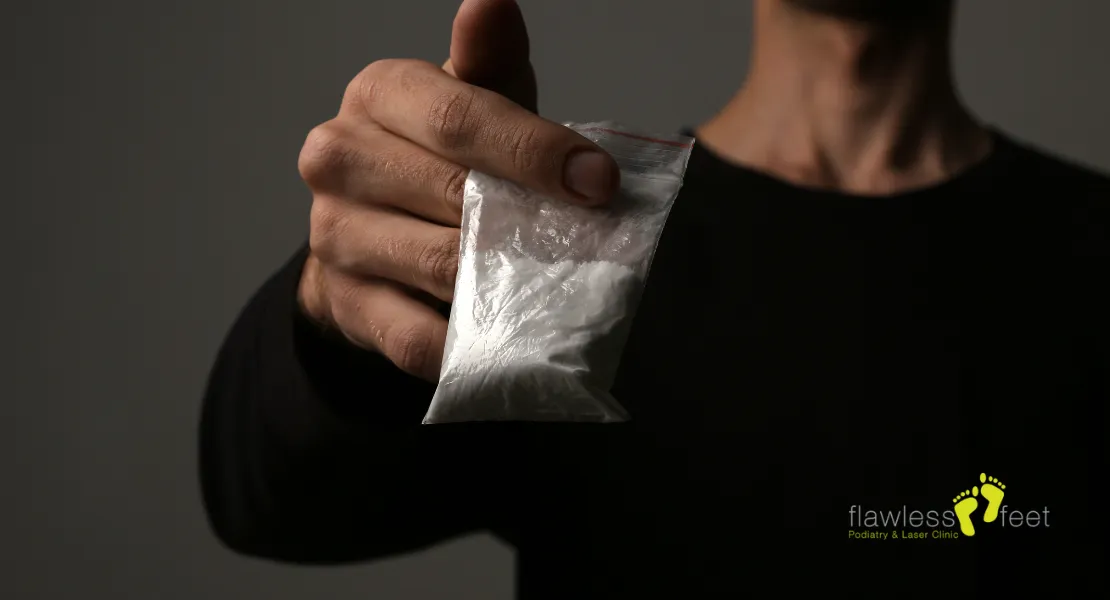
One of The Flawless Feet podiatrists has written this blog to help anyone taking cocaine. We want people to know about the damage it can do
to the body as a whole, the skin and the feet.
We never judge our patients' lifestyle choices — we are here to advise and treat, to help as many people as possible. If you or anyone
you know needs this support, please pass on our contact details below.
Last reviewed and updated: October 2026.
An overview,
As podiatrists, we learn a lot about the skin, the blood flow around the body and how they can be affected. Here are some symptoms to look out for.
- A faster heart rate, and narrowed or blocked blood vessels, causing problems with your circulation.
- Thicken skin
- Loss of feeling in hands and feet
- Cracked, black palms
- Pus-filled blistered skin
We can help to ease the symptoms — get in contact with us, or call our team on 020 3713 8361.
For free, confidential advice about drugs, visit the Talk To Frank website or call the Frank drugs helpline on 0300 123 6600.
Please continue reading if you'd like to know more about the medical conditions associated with cocaine use.
COCAINE - Also called coke or crack, cocaine is a central nervous system stimulant that’s illegally manufactured, trafficked, and sold all
around the world. It has a reputation for being one of the most addictive and dangerous drugs on the market. In addition to the various
effects of excessive cocaine use – such as addiction and cardiovascular disease – skin disease has also been reported among users. Today,
we’re sharing a list of common cocaine skin problems that may indicate a deeper problem.
Cocaine is a vasoconstrictor, which makes the heart pump faster while narrowing the blood vessels. Long-term use can lead to atherosclerosis and coronary artery disease, or hardening of the arteries or capillaries. Circulation is therefore reduced in cocaine users, and leads to a risk of peripheral arterial disease and in more severe cases, amputation. Cocaine use can also contribute to the formation of fibrous tissue in the skin, limb ischaemia and neuropathy. Cocaine was traditionally used as an anaesthetic. As with alcohol, overuse can cause permanent damage to the nerves, which is irreversible.
Common cocaine effects on the skin include:
- Necrosis or death of skin cells
- Formation of fibrous tissue in the skin or excessive scarring of the skin
- Blackening of the palms (“crack hands”)
- Pustulosis, skin condition resulting in large pus-filled blister-like areas on the skin, also known as pustules
- Henoch-Schönlein Purpura, a skin disorder caused by inflammation and bleeding in small blood vessels (can lead to reddish-purple spots in the lower extremities)
- Buerger’s disease (thromboangiitis obliterans) is a skin disease in which blood vessels swell, preventing blood flow and causing blood clotting, which leads to pain, tissue damage, and gangrene (death or decay of the body tissues)
- Bullous erythema multiforme is a hypersensitivity reaction in the skin usually caused by infections that causes skin eruptions or lesions
- Infiltration, hematoma, air embolism, and phlebitis (most common among intravenous cocaine users)
- Cocaine can cause psychosis, during which users experience hallucinations and sensations of bugs crawling in their skin. This causes them to pick and scratch at themselves, which can contribute to scratches, skin infections, and other skin diseases.
The long-term effects of cocaine use on the skin are also the result of one of its most common ingredients: levamisole. Also known by its brand name Ergamisol, levamisole is a medication used to treat parasitic worm infections. Before it was banned from being used on humans, levamisole was prescribed to treat conditions like rheumatoid arthritis and leukemia in the past. However, it was discontinued in 2000 due to adverse side effects like neutropenia (abnormally low white blood cell count), agranulocytosis, vasculitis (inflammation of the blood vessels), and of course, skin necrosis (death of skin cells). However, despite being banned for use in people, levamisole is a common ingredient in cocaine.
Cocaine is also known to produce vasoconstriction or constricting of the blood vessels. This is a significant reason why long-term cocaine use can attack the skin. Vasoconstriction restricts blood flow to certain areas of the body, including the skin. When the skin doesn’t receive enough blood and oxygen, it can’t heal itself as quickly or efficiently. In the end, not only is the skin placed in a position where it’s more vulnerable to disease, but healing is also greatly inhibited.
Pharmacodynamics of cocaine
Cocaine's main vasoactive metabolite benzoylmethylecgonine, a tropane alkaloid, is a sodium channel blocker, which produces enhanced sympathetic activity at low doses At high doses, cocaine is markedly more dangerous than other central nervous system stimulants, including amphetamines and can cause sudden cardiac death through its effect on sodium channels and local anesthetic actions.
Cocaine crosses the blood–brain-barrier perhaps better than other psychoactive chemicals and may even induce its breakdown. In addition, cocaine blocks reuptake of catecholamines in the presynaptic neurons in the central and peripheral nervous systems, resulting in increased catecholamines, sympathetic output and stimulation. Stimulation of dopamine cells in the ventral tegmental area increases blood pressure and this effect is antagonized by the dopamine D2 receptor blockers .
Acute effects of cocaine
Cocaine releases endothelin-145, which is found to be elevated in CUD and declines with detoxification. When vessels are stressed, endothelin-1 (a vasoconstrictor protein produced by vascular endothelial cells) is elevated and nitric oxide (a blood vessel dilator) decreases, leading to vasoconstriction .
Additional mechanisms implicated in cocaine induced vasoconstriction include increases in calcium. In cases of acute damage, when stress leads to rupture in vessels, endothelial damage promotes the increase of fibrinogen (glycoprotein, which helps in formation of blood clots) and Von Willebrand factor (glycoprotein signaling endothelium changes), leading to platelet aggregation and ultimately the formation of blood clots This cascade reduces blood flow following cocaine use and can lead to acute organ damage.
Cocaine creates an elevated immune system inflammatory state with decreased basal anti-inflammatory markers, and increased pro-inflammatory cytokines, all contributing to vascular disease .
Chronic effects of cocaine
Cocaine's chronic effects on the vessel consist of repeated endothelial damage leading to premature and severe atherosclerosis in various organs.
What to look for in Podiatry
Cocaine is responsible for endothelial dysfunction and accelerated atherosclerosis with consequent organ damage. Cocaine abuse is not only associated with central necrotizing vasculitis, but it is also appeared to play a role in the development of peripheral vasoconstriction with symptoms similar to Buerger's disease.
The full etiology underlying cocaine's acute neurotoxicity is multifactorial with similar mechanisms that also underlie its cardiotoxicity effects, spanning hypertension, impaired homeostasis and platelet function (aggregation), thrombosis, thromboembolism, decreased cerebral blood flow (CBF), and focal perfusion deficits .
Common cocaine effects on the skin include:
- Necrosis or death of skin cells
- Formation of fibrous tissue in the skin or excessive scarring of the skin
- Pustulosis
- Henoch-Schönlein Purpura,( reddish-purple spots in the lower extremities)
- Buerger’s disease (thromboangiitis obliterans)
- Bullous erythema multiforme
- Infiltration, hematoma, air embolism, and phlebitis (most common among intravenous cocaine users)
Reviewed October 2026. Circulation damage remains the clearest warning sign we see: cocaine narrows the blood vessels, so wounds on the feet and lower legs heal slowly — or not at all. Street cocaine is also regularly cut with other substances, so you never truly know what you're taking, and the risks to your heart, skin and feet can be higher than expected. Current alerts and advice are published on the Talk To Frank website and NHS Live Well.
Contact Flawless Feet — we're here to help, not to judge
If you're worried about how drug use is affecting your feet, skin or circulation, our HCPC-registered podiatrists can assess and treat the symptoms in complete confidence. Get in touch using the details below — or pass them on to someone who needs them.
Call, email or message us
Phone: 020 3713 8361 Email: hello@flawlessfeet.com WhatsApp: Chat with us Book an appointment online
Free, confidential drug support
Talk To Frank offers free, non-judgemental advice about drugs, 24 hours a day:
Call 0300 123 6600 or visit
talktofrank.com.
Visit one of our three London clinics
Covent Garden — 30 The Piazza, London WC2E 8BE Sydenham — 30 Sydenham Road, London SE26 5QF (open Saturdays) Croydon (Shirley Park) — 197a Shirley Road, Croydon CR0 8SB
Related Blogs