This Year's List of Podiatry-Recommended Running Shoes for Your 2024 Marathon

Summer is on our doorstep, and the number of runners we see on a daily basis is increasing. Whether you're training for your first marathon or you simply want to build your fitness, you're in good company — every one of us started somewhere.
The biggest question I am asked as a podiatrist is, 'what running shoes are good?'. Now, this is subjective — what is a great shoe for you is not a great shoe for Sally next door. We're all different, and we all need differing levels of support. That's why I'm writing this guide: to explain what shoes are out there and how to choose one that increases your performance and reduces injury.
Running Shoes At A Glance
- Know your foot type first — flexible, pronating feet want stability; rigid, high-arched feet want cushioning.
- Around 8mm heel-to-toe drop is a sensible starting point for most runners.
- 0mm drop is for experienced runners with strong feet and lower limbs — and no drastic changes from your current shoe.
- Still unsure? A professional gait analysis takes the guesswork out of choosing.
Step 1: What Foot Type Am I?
Generally, running shoes are separated into stability and cushioning models. If you are a hypermobile person running in a cushioning shoe, it will feel like a bag of bones trying to run through sand — it just won't work. People who have hypermobile joints tend to pronate, which affects the entire gait cycle and gait style. These people generally want to wear a more stable shoe. Remember: flexible feet that pronate want more stability.
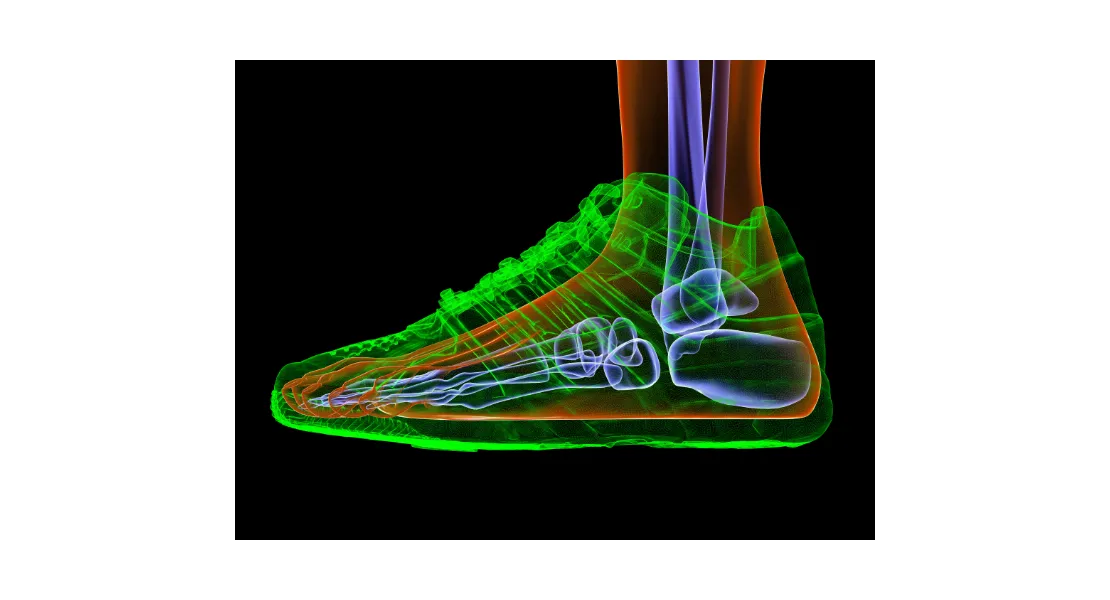 Now, on the other hand… the rigid high arches. This is generally your typical 6-foot rugby player with super tight muscles —
the kind of person who has clearly never been to a yoga session in their life. They want to be wearing something cushioning, because a
rigid foot doesn't have a great ability to absorb forces; the shoe has to do that job instead.
So, in short:
- Hypermobile, pronated feet = stability models
- Rigid, high arches = cushioning models
Step 2: Heel-To-Toe Drop
This means how high the heel sits in comparison to the forefoot. On average, most trainers have a heel-to-toe drop of around 8mm, which I think is a great start — and most people should generally look for something similar.
Who should be wearing 0mm drop shoes? Generally, I would only encourage experienced runners to trial these, as long as they aren't making drastic changes from their current running shoe. For a 0mm drop shoe you need really strong feet and lower limbs. Others who may benefit from a low heel-to-toe drop include:
- Runners who frequently experience ankle sprains — elevating the heel increases ankle instability, so a lower drop generally feels better for this group
- Trail runners seeking stability on uneven ground
- People with a Morton's neuroma
Again, this is subjective — for this level of advice, I would recommend consulting your podiatrist.
Who needs a high heel-to-toe drop shoe? Typically, the super-tight non-yogis with really tight hamstrings and calves. Anyone with lower back pain may also feel a little more supported in a higher heel, as this can open up and offload these structures.
The Podiatry Cheat Sheet
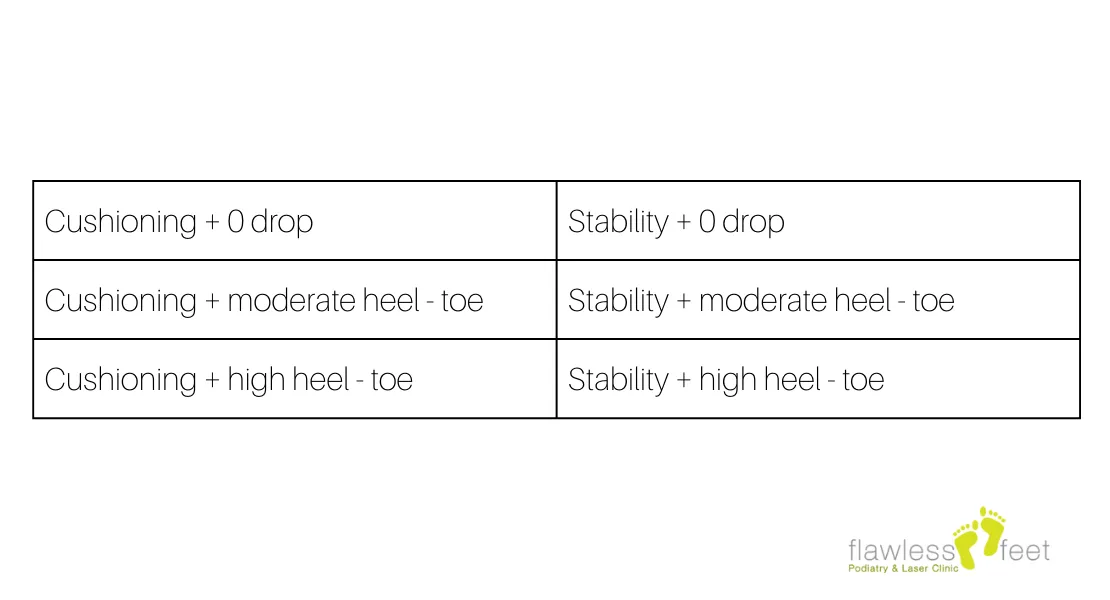
If you're super confused about everything that's just happened, refer to my table below.
Here's another great table with the specific brands and models I like to work with.
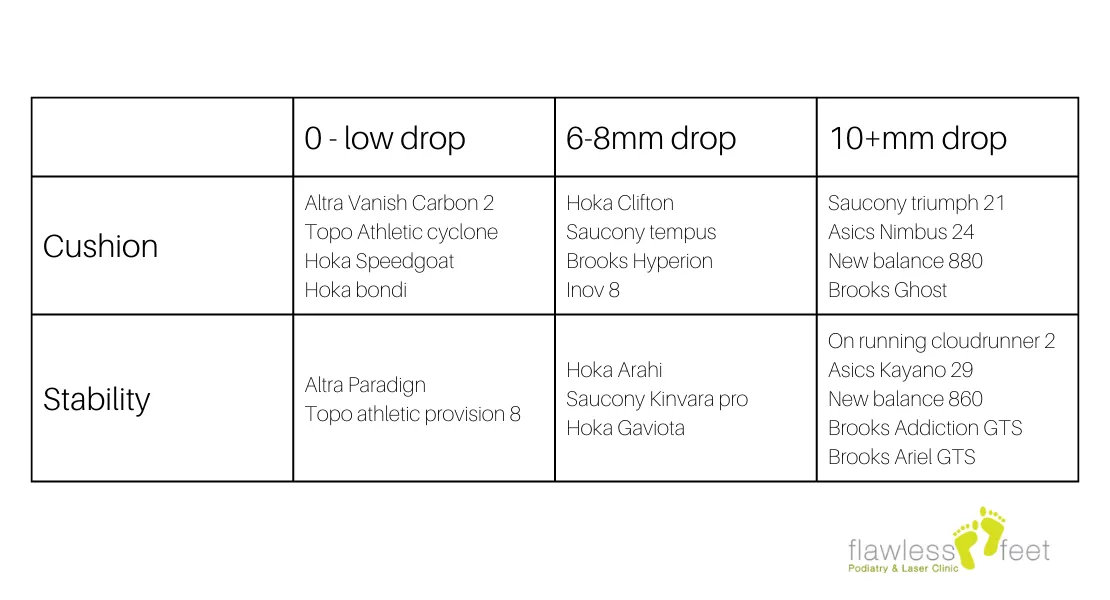
I'm not going to go on and on about the key features of each shoe, because you'll be asleep by the end of it — and this guide was never designed for the ultramarathon athlete. Shoes are complex, and if you're a complex runner, you'll need more than this to find your niche. This is for the average Joe looking to get into running but who doesn't know where to start (and don't worry, ultramarathon runners, we've got the good stuff for you too).
When To See A Podiatrist
- Anyone can visit a podiatrist — whether simply for advice, or because you want to get into running with the least chance of injury.
- Anyone with lower limb 'niggles' or pains that keep bugging them every time they reach a milestone. If you find yourself saying, 'I can never get past 5k', or 'when I run 45km I start to get calf strains' — we are here to help.
Ready To Run With Confidence?
Book a gait analysis with one of our podiatrists and we'll match your foot type to the right shoe — before injury finds you.
Frequently Asked Questions
Visit Flawless Feet
Our podiatrists at Flawless Feet help runners of every level choose the right shoes, recover from injury and stay on the road. You'll find us at three clinics:
Call 020 3713 8361 or email hello@flawlessfeet.com to book your appointment.
Related Blogs